How to Dispute a Wrong Credit Report in 5 Steps (2026)
To dispute a credit report error, file a free dispute with each bureau that shows the mistake — Equifax, Experian, or TransUnion — online, by phone, or by mail. Under the Fair Credit Reporting Act (FCRA), the bureau generally has 30 days to investigate, and both the bureau and the lender that reported the data must correct inaccurate information at no charge.

To make each step concrete, meet Maria: a 34-year-old nurse in Columbus, two weeks from a mortgage application, who spotted a 30-day late payment on her auto loan — a payment she never actually missed. We'll follow her dispute from the first report pull to the final correction.
Step 1: Confirm It's Actually an Error (and Pull All Three Reports)
Start at AnnualCreditReport.com, the federally authorized source. The old once-every-12-months limit is gone: all three bureaus now permanently offer a free report once a week, and Equifax separately offers 6 additional free reports per year through 2026 (online or at 1-866-349-5191).
Maria pulled all three reports and compared them line by line. That step matters because lenders don't always report to every bureau: an error can appear on one, two, or all three reports, and each bureau showing it needs its own dispute. Her phantom late payment showed on Experian and TransUnion, but her Equifax file was clean — so she needed exactly two disputes, not three.
Genuinely disputable errors include:
- Accounts that aren't yours (mixed files or identity theft)
- Payments marked late that you made on time
- Wrong balances, credit limits, or account statuses
- The same debt listed twice
- Negative items older than 7 years — or 10 years for Chapter 7 bankruptcy
Accurate negative information cannot be disputed away. "Credit repair" companies often charge ongoing monthly fees to dispute accurate items — disputes the bureaus can lawfully dismiss as frivolous. Everything in this guide is free to do yourself.
Step 2: File with Equifax, Experian, and TransUnion — Separately
A correction at one bureau does not automatically copy to the others, so file with every bureau reporting the error. Here are the official channels:
| Bureau | Phone | Dispute mailing address |
|---|---|---|
| Equifax | (866) 349-5191 | Equifax Information Services LLC, P.O. Box 740256, Atlanta, GA 30348 |
| Experian | (888) 397-3742 | Experian, P.O. Box 4500, Allen, TX 75013 |
| TransUnion | (800) 916-8800 | TransUnion LLC Consumer Dispute Center, P.O. Box 2000, Chester, PA 19016 |
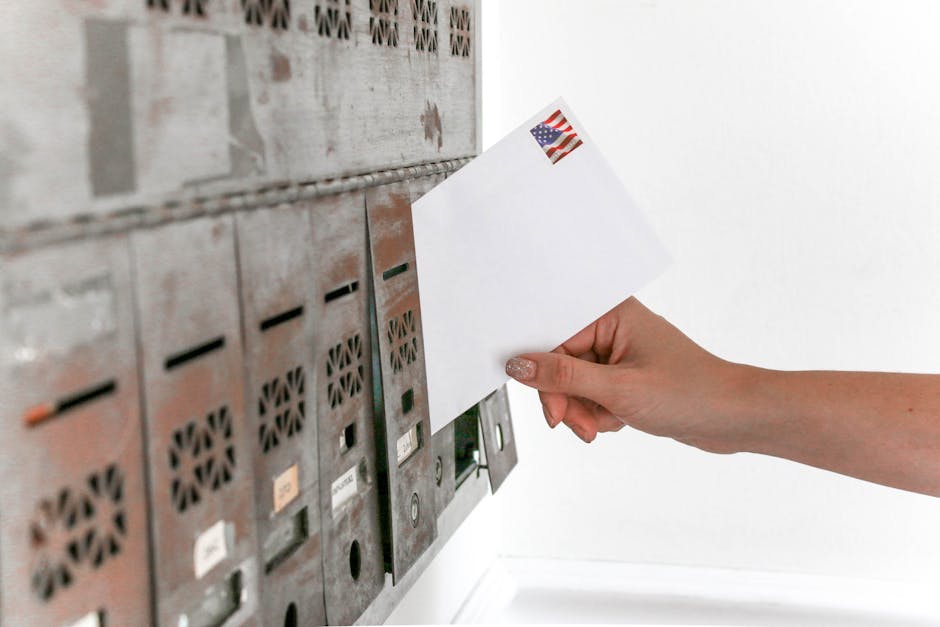
Each bureau also has an online dispute portal, and TransUnion takes phone disputes Monday–Friday 8 a.m.–11 p.m. ET and weekends 8 a.m.–5 p.m. ET. Online is fastest, but here's what most guides skip: a mailed letter sent by certified mail with a return receipt creates a dated paper trail that online forms don't — evidence that matters if you later escalate to the CFPB or court. The FTC publishes a free sample dispute letter you can copy.
Whichever channel you use, include:
- Your contact information and the report confirmation number, if available
- Each error identified by account number, with a clear explanation and a request to correct or remove it
- A copy of your report with the disputed items highlighted
- Copies — never originals — of proof, such as bank statements or payment confirmations
Maria also sent the same packet to her auto lender — the "furnisher" that reported the bad data. Furnishers have their own FCRA duty to investigate and to correct errors with all three bureaus, so disputing on both fronts closes the loop faster.
Step 3: The 30-Day Investigation Clock
However you file, the bureau generally has 30 days to investigate, extendable to 45 days if you submit additional information mid-investigation. Here is the timeline Maria tracked:
- Day 0: File the dispute; keep copies of everything and the certified-mail receipt.
- Within 5 business days: The bureau must forward your dispute, with all relevant evidence, to the furnisher.
- By day 30 (or 45): The investigation concludes — the item is deleted, corrected, or "verified as accurate."
- Within 5 business days of completion: The bureau must send you the results, plus a free updated report if anything changed.
Know what "verified" really means: the furnisher often just checks the dispute against its own records — the same records that produced the error. Mark day 30 on your calendar the day you file; if you've heard nothing by then, that silence itself is grounds to escalate. TransUnion deleted Maria's late mark on day 19. Experian came back "verified as accurate."
Step 4: If the Dispute Is Denied, Escalate — Don't Just Resend
A denial isn't the end, but a bare repeat of the same dispute can be flagged as frivolous and dismissed — the bureau then only owes you a notice explaining that decision within 5 business days. Never resend an unchanged dispute; add new evidence or move up the escalation ladder instead.
- Re-dispute with new documentation. Maria got a letter from her lender admitting a misapplied payment and refiled with it — Experian corrected the entry 12 days later.
- Add a consumer statement (roughly 100 words) to your file for free, so future lenders see your side.
- File a CFPB complaint at consumerfinance.gov. Credit reporting is consistently the CFPB's top complaint category, and companies typically respond within about 15 days.
- Consider an FCRA lawsuit. Willful violations carry statutory damages of $100–$1,000 plus actual damages, and many consumer-law attorneys take these cases on contingency.
Step 5: What the Fix Does to Your Score (Worked Example)
Payment history is about 35% of a FICO score — the largest single factor — which is why a false late payment or collection hurts far more than a wrong credit limit. FICO doesn't publish exact point tables, so treat any "you'll gain X points" promise skeptically.
Here's the conservative math on Maria's file. She has 3 open accounts averaging about 7 years of history — roughly 250 reported monthly payments. One false late mark drops her on-time rate from 100% to 249/250, or 99.6%. That sounds trivial, but a recent late payment on an otherwise clean file is the kind of profile scoring models tend to penalize heavily — and mortgage pricing works in score tiers, so recovering even one tier can change her rate quote.
Don't recheck the next morning. Furnishers report on monthly cycles, so allow 1–2 billing cycles after your correction notice for the score to reflect the fix. Details like the Equifax free-report program are as of 2026 and subject to change — verify current terms on the official sites.
After a correction, pull fresh reports from all three bureaus at AnnualCreditReport.com — free weekly — to confirm the fix propagated everywhere before you apply for that mortgage or auto loan.
Related reading
Good to Know
How long does a credit report dispute take?
The bureau generally has 30 days to investigate, extendable to 45 days if you submit new information mid-investigation. Results must be sent to you within 5 business days of completion.
Does filing a dispute hurt my credit score?
No. Filing a dispute is free and is not itself factored into your score. Only the outcome — information corrected or removed — changes it.
Should I dispute online or by mail?
Online is fine for simple errors and is fastest. For anything you may need to escalate, a certified-mail letter with return receipt creates a dated legal paper trail and lets you attach full documentation.
Do I have to dispute with all three bureaus?
Only with the bureaus actually showing the error — check all three reports first, since furnishers don't always report to every bureau. Disputing with the furnisher (the lender) as well speeds up corrections.


Comments
Post a Comment